What Is SEO for Local Businesses? Simple Guide (2026)
If you run a local business, SEO has one job: help nearby customers find you on Google when they’re ready to hire. Not more “traffic” for bragging rights. More calls. More quote requests. More booked jobs.
Plain-English promise: No jargon and no fluff. Just the stuff that actually gets your phone ringing.
On This Page
What “SEO for local businesses” actually means
1) Your Google Business Profile
2) Your website, especially service pages
3) Trust signals, reviews and listings
What “SEO for local businesses” actually means
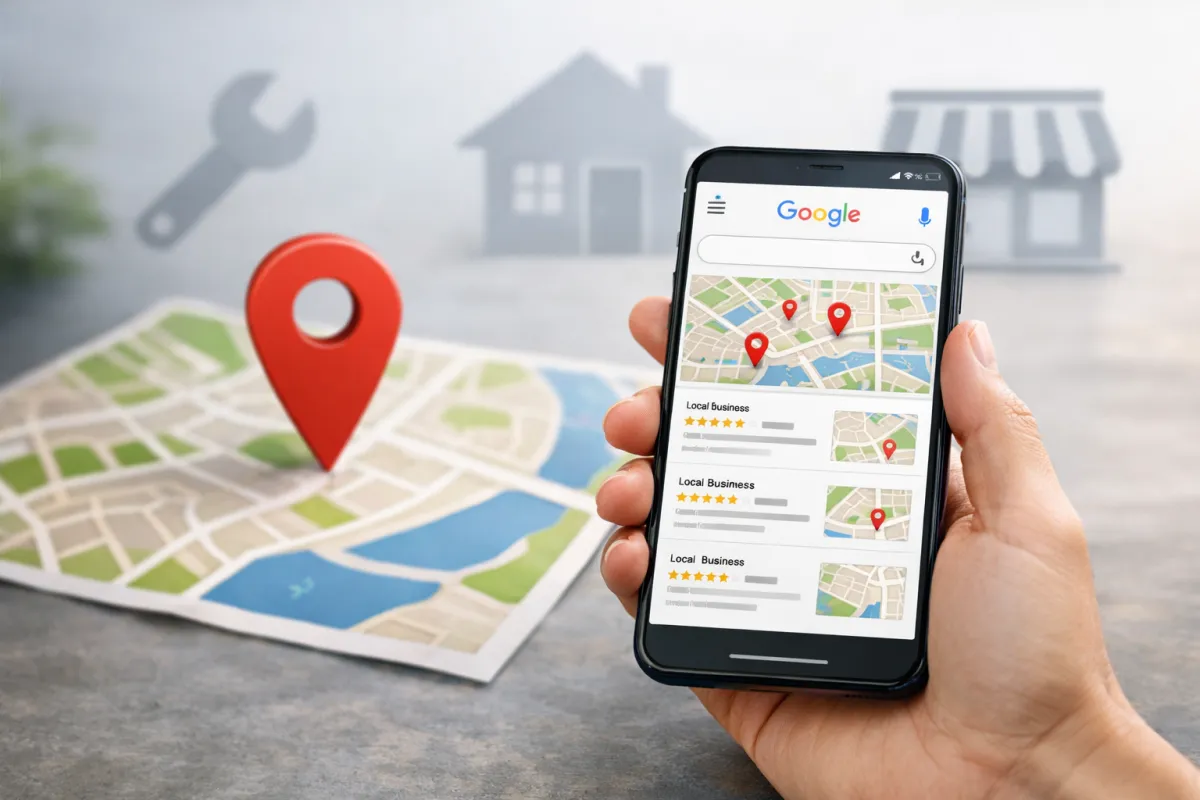
SEO for local businesses is the process of improving your online presence, so you show up in:
Google Search (regular search results)
Google Maps (the map pack / local listings)
It usually includes work on your website, Google Business Profile, online listings (directories), reviews, and content.
Why local SEO matters
Most local customers follow a simple pattern:
They search for a service (example: “pool cleaning near me” or “roofing company Dallas”).
They click a few options that look trustworthy.
They call the business that feels easiest to reach and most legit.
If you don’t show up, you don’t get the call. If you show up but look weak compared to competitors, you still don’t get the call. Local SEO helps you show up more often and look more credible.
Local SEO vs “regular SEO”
Traditional SEO often focuses on national or broad searches. Local SEO focuses on people in your service area who are ready to hire. That’s why local SEO leans hard on Google Maps visibility, service pages, and local trust signals like reviews and consistent business info.
Quick takeaway: If your business makes money from calls, quotes, or walk-ins, local SEO is usually your highest ROI SEO move.
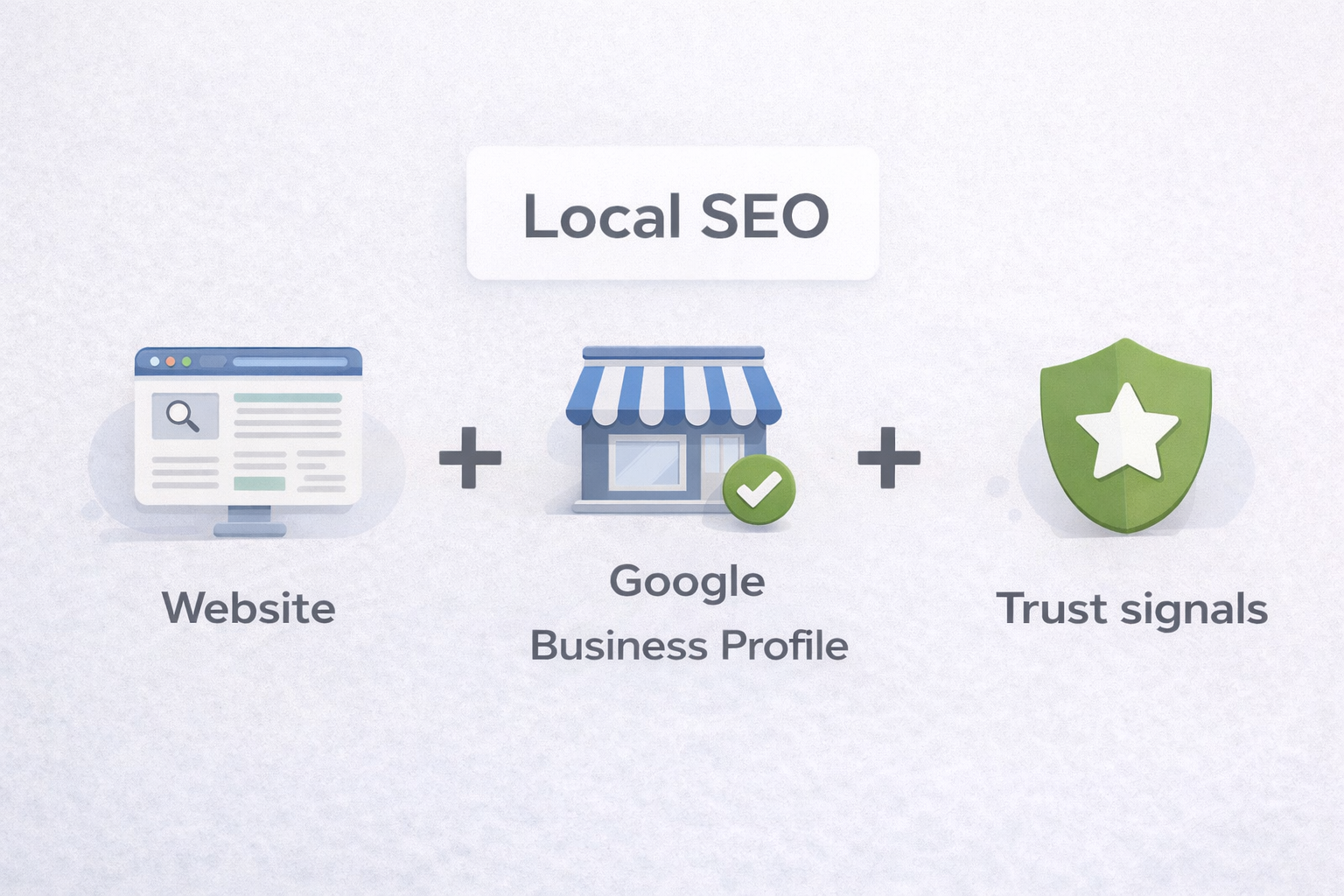
The 3 big pieces of local SEO
1) Your Google Business Profile
This is your Maps listing. It’s often one of the biggest drivers of local calls. A strong profile has accurate info, the right categories, services listed clearly, good photos, and reviews coming in consistently.
2) Your website, especially service pages
Your website tells Google what you do and where you do it. For most local businesses, the pages that matter most are:
Homepage
Service pages (one per core service)
Service area pages (if you serve multiple cities)
Contact page
3) Trust signals, reviews and listings
Google wants consistency and legitimacy. That means your business name, address, and phone are consistent across the internet, and your reviews look real and ongoing, not like they stopped two years ago.
How long does local SEO take?
Local SEO is a snowball, not a switch. Most businesses see early movement in about 60 days, with stronger progress around 90+ days. Competitive areas can take longer, but the results build over time.
Reality check: Anyone promising “page one next week” is usually selling ads, hype, or both.
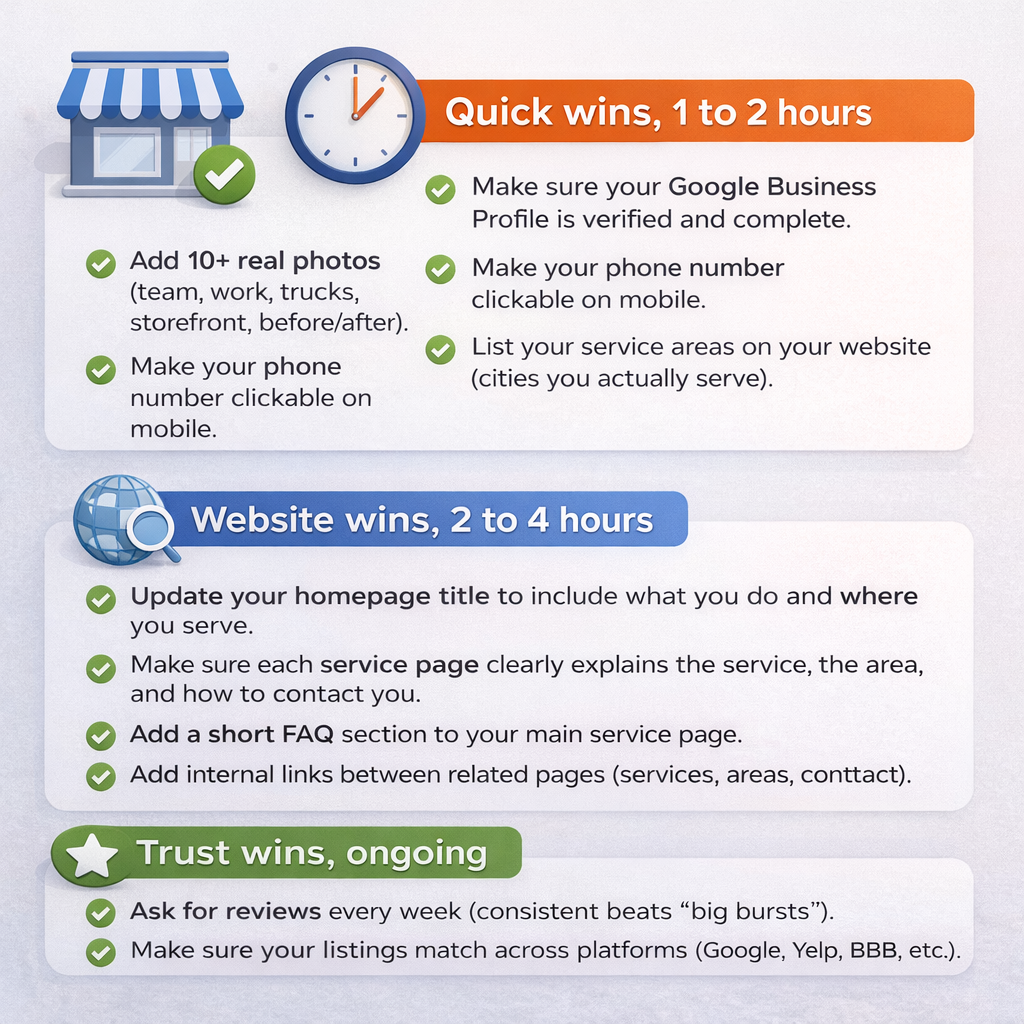
A simple local SEO checklist you can do this week
You don’t need to be an SEO nerd to start seeing wins. Start here:
Quick wins, 1 to 2 hours
Make sure your Google Business Profile is verified and complete.
Add 10+ real photos (team, work, trucks, storefront, before/after).
Make your phone number clickable on mobile.
List your service areas on your website (cities you actually serve).
Website wins, 2 to 4 hours
Update your homepage title to include what you do and where you serve.
Make sure each service page clearly explains the service, the area, and how to contact you.
Add a short FAQ section to your main service page.
Add internal links between related pages (services, areas, contact).
Trust wins, ongoing
Ask for reviews every week (consistent beats “big bursts”).
Make sure your listings match across platforms (Google, Yelp, BBB, etc.).
When it’s time to hire help
If your website is outdated, your Google listing is weak, or competitors dominate Maps, it’s usually faster to get a proper plan and fix it correctly. If you want, we can do a quick audit and tell you what’s holding you back and what to fix first.
Want more calls from Google?
Check out our SEO services for local businesses. We handle your Google Business Profile, website SEO, and the tracking so you’re not guessing.